
• Latest
  • Trending
  • All
Voyager 1

Voyager 1 in Trouble: Can We Talk to Our Spacecraft?

March 8, 2024
Monster storms on Jupiter unleash

Monster storms on Jupiter unleash terrifying power

April 29, 2026
The most energetic neutrino ever

The most energetic neutrino ever detected: Stunning!

April 29, 2026
ADVERTISEMENT
Orbital dances unlock true masses

Orbital dances unlock true masses: Incredible news!

April 29, 2026
Scientists map hidden magnetism on the sun

Scientists map hidden magnetism on the sun: Incredible!

April 29, 2026
A new cosmic simulation with cinematic

A new cosmic simulation with cinematic flair: Amazing!

April 28, 2026
An Earth-Moon twin in a habitable zone

An Earth-Moon twin in a habitable zone found elusive

April 28, 2026
Famous asteroid Ryugu may have

Famous asteroid Ryugu may have suffered violent bombardment

April 28, 2026
TOI 201 planets are wobbling out of

TOI-201 planets are wobbling out of sight: Shocking!

April 28, 2026
NASA’s 2028 nuclear Mars mission

NASA’s 2028 nuclear Mars mission: Risky plan!

April 27, 2026
The Nancy Grace Roman space telescope

The Nancy Grace Roman space telescope: Stunning Finish

April 27, 2026
New organic chemicals on Mars

New organic chemicals on Mars: Amazing discovery!

April 27, 2026
an image shows our solar system

An image shows our solar system breathing: Stunning!

April 27, 2026
NASA Space News
No Result
View All Result
  • Home
  • Missions
    SIMP-0136 weather report

    SIMP-0136 Weather Report Reveals Storms and Auroras on a Rogue World

    Moon-forming disk

    JWST Reveals the Chemistry Inside a Moon-forming disk

    Little Red Dots

    Are the “Little Red Dots” Really Black Hole Stars? What JWST Is Revealing About the Early Universe

    Pismis 24 Star Cluster

    Inside the Lobster Nebula: Pismis 24 Star Cluster Unveiled

    Comet Lemmon

    A Rare Cosmic Visitor: Will Comet Lemmon Light Up October Sky?

    Butterfly Star

    The Butterfly Star: How James Webb New Discovery Unlocks Secrets of Planet Formation

    James Webb Space Telescope

    A Cosmic Masterpiece: James Webb Space Telescope Reveals the Heart of a Stellar Nursery

    interstellar comet

    A Cosmic Visitor Lights Up Our Solar System: The Story of Interstellar Comet 3I/ATLAS

    Interstellar comet 3I/ATLAS

    How TESS Spotted the Interstellar Comet 3I/ATLAS Early—and What It Means for Science

  • Planets
  • Astrophysics
  • Technology
  • Research
  • About
  • Contact Us
NASA Space News
No Result
View All Result
Home News

Voyager 1 in Trouble: Can We Talk to Our Spacecraft?

by nasaspacenews
March 8, 2024
in News, Solar System, Voyager
0
Voyager 1
Share on FacebookShare on Twitter

Voyager 1, humanity’s farthest-flung ambassador, might be facing its final curtain call. Launched in 1977 with a lifespan expectation of just four years, this intrepid spacecraft has not only defied expectations but has become a beacon of scientific discovery and human ambition. Since November 2023, however, Voyager 1 has fallen eerily silent, leaving a gaping hole in our connection to the solar system’s farthest reaches.
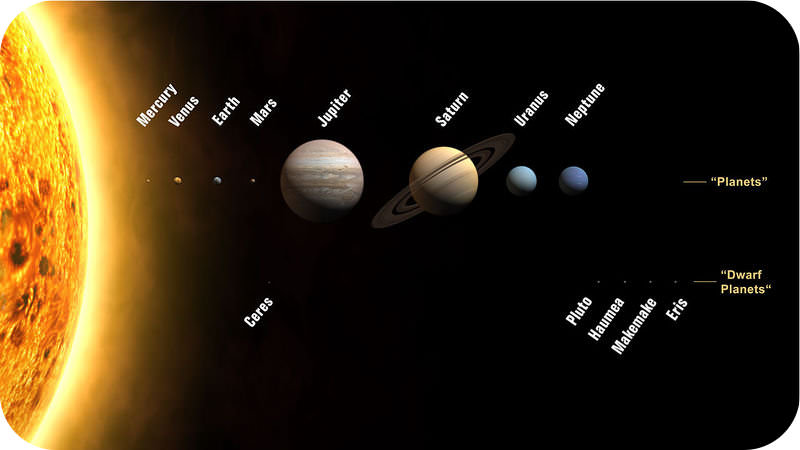
Planets of the Solar System ( Read ) | Earth Science | CK-12 Foundation

Table of Contents

Toggle
  • A Grand Tour of the Outer Solar System and Beyond
  • Pale Blue Dot: A Universal Perspective and a Legacy of Discovery
  • Facing the Silence: A Race Against Time and the Challenges of Deep Space Communication
  • A Fight to Reconnect: A Legacy That Endures and Inspires Future Generations
  • An Eternal Journey: A Pioneer in the Cosmic Sea

A Grand Tour of the Outer Solar System and Beyond

Voyager 1, along with its twin Voyager 2, were designed for a quick exploration of the gas giants Jupiter and Saturn. A rare planetary alignment, however, presented a golden opportunity. By utilizing the gravity of each planet as a slingshot, the Voyagers were able to hurtle past Uranus and Neptune, becoming the first and only spacecraft to grace all four outer giants.

These journeys were nothing short of groundbreaking. Voyager 1 unveiled the volcanic nightmares of Jupiter’s moon Io and the mesmerizing rings encircling Saturn. It provided invaluable data on the Great Red Spot, Jupiter’s persistent anticyclonic storm. Voyager 2, venturing even further, explored the ice giants Uranus and Neptune, revealing a treasure trove of new moons and strange atmospheric phenomena.

Pale Blue Dot: A Universal Perspective and a Legacy of Discovery

In 1990, as Voyager 1 sped outwards on its cosmic voyage, it took one last, poignant look back. Captured in that faint image, a “Pale Blue Dot,” was Earth, a tiny speck suspended in the vast canvas of space. This photograph, championed by astronomer Carl Sagan, became a powerful and humbling reminder of our place in the universe – a lonely blue marble amidst the grand cosmic dance.

ADVERTISEMENT

Both Voyagers carry a unique message tucked away for any potential extraterrestrial encounters – a golden record. This record, a modern-day message in a bottle, is a curated collection of Earth’s sounds, languages, and images. It’s a testament to human diversity, a hopeful handshake across the gulf of interstellar space.

Facing the Silence: A Race Against Time and the Challenges of Deep Space Communication

Since late 2023, a troubling silence has gripped Voyager 1. A glitch in its computer system has severed communication, leaving scientists with no way to receive data or assess the spacecraft’s health. This is, by far, the most critical challenge Voyager 1 has ever faced.

Losing Voyager 1 would be a monumental loss. It wouldn’t just signify the end of a groundbreaking scientific mission; it would be akin to bidding farewell to a courageous explorer who ventured into the unknown and returned with awe-inspiring discoveries. Voyager 1’s accomplishments extend far beyond the data it collected. It pushed the boundaries of human engineering, venturing into the unforgiving environment of deep space and surviving for decades.

The knowledge gleaned from Voyager 1’s exploration of the outer solar system has fundamentally reshaped our understanding of these distant worlds. It revealed active volcanoes spewing molten rock on Jupiter’s moon Io, challenged our understanding of the formation of Saturn’s rings, and unveiled a wealth of new moons orbiting the gas giants.

A Fight to Reconnect: A Legacy That Endures and Inspires Future Generations

NASA’s engineers are engaged in a herculean effort to revive communication with Voyager 1. The task is daunting. The immense distance, over 15 billion miles, translates to a 45-hour lag time for any messages to reach the spacecraft. Additionally, Voyager 1 relies on 1970s technology, making troubleshooting a complex endeavor akin to fixing a vintage computer with limited tools and resources.

The team, however, remains hopeful. With Voyager 1’s 50th anniversary approaching in 2027, there’s a renewed determination to re-establish contact. After all, Voyager 1 has overcome technical hurdles before. In 1980, the spacecraft entered a safe mode after a minor issue, and engineers were able to restore full functionality.

An Eternal Journey: A Pioneer in the Cosmic Sea

Even if regaining communication proves impossible, Voyager 1’s journey isn’t over. Both Voyagers are powered by radioactive generators that are expected to run out around 2025. However, their physical hulls will continue their silent trek through the cosmos for tens of thousands of years.

ADVERTISEMENT

Currently, Voyager 1 is hurtling through the interstellar void, over 40,000 years away from the nearest star. Its ultimate fate remains shrouded in mystery. It may encounter another solar system, its golden record a silent plea for understanding across the vast gulf of space. Or it may forever wander the interstellar expanse, a lonely testament to human ingenuity.

But one thing is certain: Voyager 1 will continue to inspire generations to come. It serves as a permanent reminder of humanity’s capacity for exploration, a testament to our curiosity and our yearning to understand the universe beyond our blue planet. The data it collected and the images it captured will forever be etched in the annals of scientific discovery. Voyager 1 may be fading from our grasp, but the brilliance of its achievements and the profound questions it has raised about our place in the cosmos will continue to ignite the flames of exploration for years to come.

Tags: cosmic mysteriescutting-edge technologyextraterrestrialNASAspace discovery

FEATURED POST

Monster storms on Jupiter unleash

Monster storms on Jupiter unleash terrifying power

April 29, 2026
The most energetic neutrino ever

The most energetic neutrino ever detected: Stunning!

April 29, 2026
Orbital dances unlock true masses

Orbital dances unlock true masses: Incredible news!

April 29, 2026
Scientists map hidden magnetism on the sun

Scientists map hidden magnetism on the sun: Incredible!

April 29, 2026

EDITOR PICK'S

Monster storms on Jupiter unleash terrifying power

April 29, 2026

The most energetic neutrino ever detected: Stunning!

April 29, 2026

Orbital dances unlock true masses: Incredible news!

April 29, 2026

Scientists map hidden magnetism on the sun: Incredible!

April 29, 2026

A new cosmic simulation with cinematic flair: Amazing!

April 28, 2026

An Earth-Moon twin in a habitable zone found elusive

April 28, 2026

Famous asteroid Ryugu may have suffered violent bombardment

April 28, 2026

STAY CONNECTED

Recent News

Monster storms on Jupiter unleash

Monster storms on Jupiter unleash terrifying power

April 29, 2026
The most energetic neutrino ever

The most energetic neutrino ever detected: Stunning!

April 29, 2026

Category

  • Asteroid
  • Astrobiology
  • Astrology
  • Astronomy
  • Astrophotography
  • Astrophysics
  • Auroras
  • Black holes
  • Comets
  • Cosmology
  • Dark energy
  • Dark Matter
  • Earth
  • Euclid
  • Exoplanets
  • Galaxies
  • Jupiter
  • JWST
  • Mars
  • Mercury
  • Meteor showers
  • Missions
  • Moon
  • Neptune
  • News
  • Others
  • Planets
  • QuantumPhysics
  • quasars
  • Research
  • Rocks
  • Saturn
  • solar storm
  • Solar System
  • stars
  • sun
  • Technology
  • Universe
  • Uranus
  • Venus
  • Voyager

We bring you the latest news and updates in space exploration, innovation, and astronomy.

  • ABOUT US
  • CONTACT US
  • DISCLAIMER
  • PRIVACY POLICY
  • Terms of Service

© 2025 NASA Space News

No Result
View All Result
  • Home
  • Missions
  • Planets
  • Astrophysics
  • Technology
  • Research
  • About
  • Contact Us

© 2025 NASA Space News

Welcome Back!

Sign In with Facebook
Sign In with Google
Sign In with Linked In
OR

Login to your account below

Forgotten Password?

Retrieve your password

Please enter your username or email address to reset your password.

Log In

Add New Playlist